Welcome to the SCNPS Upstate Chapter Online Store. Our store is not open for sales at this time, but you may browse any time. PLEASE REALIZE that the plant species, numbers available, prices, and pot sizes are in the process of being UPDATED for our upcoming sale. ALL subject to change before the sale starts.
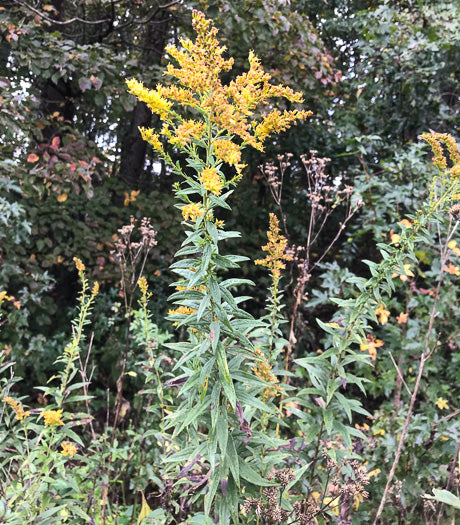
Height: 3’ to 6’ Spread: 5’+ Light Needs: full sun, part sun Water: average, adaptable Flower color: yellow Bloom time: September, October
This native goldenrod is locally common in sunny fields and disturbed areas. It spreads by rhizomes and seeds to form colonies. The stems are upright and topped in fall by flowers in a plume-like arrangement. This species is too aggressive for the typical small garden but is well-suited for a prairie or a restoration project. Like other goldenrods, a wide assortment of insect pollinators are attracted to the flowers. Birds eat the seeds. It has moderate deer resistance.
It is worth noting that goldenrods do not cause hay fever. The lightweight, air-borne pollen grains of plants like ragweed cause hay fever. Goldenrod pollen is comparatively heavy and sticky. It is moved from flower to flower by insects.